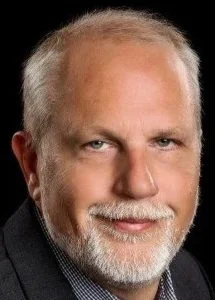
Written By: Frank Saulsbery

THE LATEST THOUGHTS FROM THE FOUNDER
A running column from Frank Saulsbery. Not a sales pitch, just the way he’d explain it if you pulled up a stool next to him. Meet Frank →
A SNEAK PEEK…
“At the end of the day, this isn’t really about technology, it’s about control.”
You’re sitting down to plan next year’s budget, maybe with your accountant or your leadership team, and someone asks, “What should we put in for IT?” And the honest answer feels a little uncomfortable… “I’m not really sure.”
So you take a guess. Maybe you look at what you spent last year and add a little cushion. Maybe you remember that one surprise invoice that stung and think, “Let’s just plan for more, just in case.”
If that sounds familiar, you’re not alone. Most business owners I talk to feel like technology costs are one of the hardest things to predict. And it’s frustrating, because everything else in your business feels more controllable. Payroll, rent, insurance, you can plan those pretty closely. IT often feels like a moving target.
Technology doesn’t have to be unpredictable, but it often is when it’s managed in a reactive way. If you’re only paying for IT when something breaks, then of course your costs will bounce around. Some months are quiet. Other months, a server fails, a printer dies, or someone clicks a bad link and suddenly you’re dealing with an incident you didn’t plan for.
That’s not really a budgeting problem, it’s a structure problem. When your technology is supported under a properly built managed service agreement, most of those day-to-day issues are already accounted for. Things like troubleshooting user problems, dealing with spam filters, adjusting security settings, fixing printers, and responding to alerts are all included in a consistent monthly cost.
That means you’re not getting random invoices for a couple hundred or a couple thousand dollars because something needed attention. The “noise” of IT, all the little things that add up, is already baked into your plan.
Now, that doesn’t mean everything in IT is a flat monthly fee. There are still two other pieces you need to think about. The first is growth and change. If you add employees, open a new location, or move offices, there will be costs tied to those changes. The key difference is that these aren’t surprises. They’re tied to business decisions you’re already planning for. When you grow, your technology budget grows with you. When you scale back, it adjusts the other way.
The second piece is hardware. Your computers, laptops, servers, and other equipment don’t last forever, but they also shouldn’t be running until they fail either.
The healthiest approach is to treat hardware like a predictable cycle instead of a one-time purchase. For many businesses, that means replacing about a third of their computers each year so everything stays within a three-year lifecycle and under warranty. In some cases, that window can stretch a bit longer depending on the type of work you do and how demanding your software is.
When you follow that kind of rhythm, you avoid the situation where five or ten machines all fail around the same time and suddenly you’re writing a much larger check than expected. You also reduce downtime, which is harder to measure but often much more expensive than the device itself.
So how does this play out for your business? If your IT budget still feels like guesswork, it’s probably a sign that your approach is more reactive than planned. That doesn’t mean you’re doing anything wrong. It just means you haven’t been given a clear, structured way to think about it yet.
A well-managed environment should let you look ahead and say, “This is what we’ll spend monthly. This is what we expect for equipment this year, and this is what will change if we grow.” It won’t be perfect down to the dollar, but it should be close enough that there are very few surprises.
And to be fair, not every business needs the same level of structure. If you’re very small, or if downtime isn’t very costly for you, you might be comfortable with a little more variability. But most growing businesses eventually reach a point where predictability becomes more valuable than squeezing every last dollar out of short-term savings.
At the end of the day, this isn’t really about technology, it’s about control. Do you feel like your IT costs are something that happens to you, or something you can plan for with confidence?
It might be worth taking a step back and looking at the last 12 months. Were there surprises, were there stretches of calm? And if you averaged it all out, does it look like something you could have predicted with a better structure in place?
If the answer is yes, that’s a good place to start the conversation.
That’s how I see it, anyway, and I’d enjoy hearing how you see it. None of this is a sales pitch. It’s just the kind of thing I’d talk through with you if we were sitting across the table. If it raised a question, or you think I have it wrong, I want to hear about it.
My door is always open. Whether you want to talk this through or just say hello, you can reach me anytime.
Network Solutions Unlimited is a generational managed IT services provider based in Decatur, Illinois, serving businesses and nonprofits with genuine support and decades of trusted relationships. Led by Baily Saulsbery and founded by her father Frank, we're not just your IT provider; we're your neighbors who happen to be really good at technology. Contact us today to experience IT support that actually cares.