Protecting Your Most Sensitive Data With Network Segmentation
Written By: Frank Saulsbery
Picture this: you walk into your office one morning, coffee in hand, and your entire network has been compromised. Client financial records, donor databases, employee files, internal communications, all of it exposed because an attacker found one way in and had access to everything. That's the nightmare scenario for any organization operating on a flat, unsegmented network.
Here's the good news: it doesn't have to be that way. Network segmentation is one of the most effective (and often overlooked) strategies for protecting sensitive data, and it doesn't require a massive budget or a complete infrastructure overhaul. It just requires a thoughtful approach and a partner who takes the time to understand how your organization actually works.
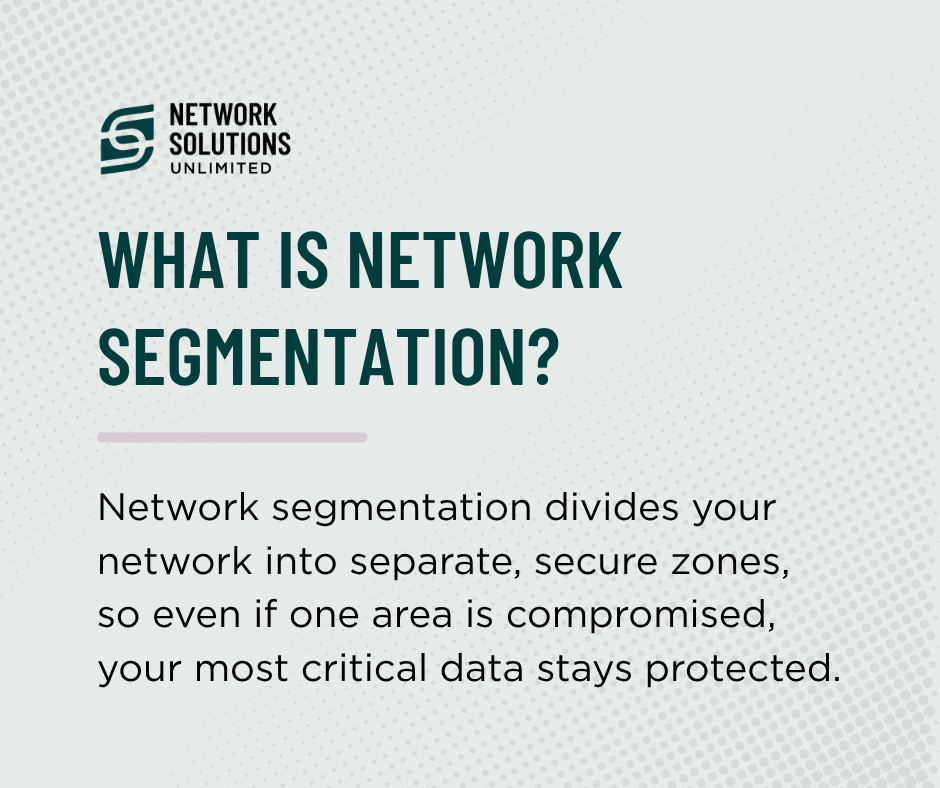
What Network Segmentation Actually Means (In Plain English)
Let's skip the jargon for a minute. Think of your network like a building. Right now, many organizations essentially have one big open room where everything lives together. Your accounting software is on the same network as the guest Wi-Fi. Your donor database shares space with everyday web browsing. If someone gets through the front door, they can wander anywhere they want.
Network segmentation is like adding walls, doors, and locks to that building. You create separate rooms for different types of data and activity, each with its own access controls. Someone connecting to your guest Wi-Fi can't suddenly access your financial data systems. An employee in marketing doesn't automatically have access to payroll records. And if an attacker manages to breach one section, they hit a wall instead of having free rein over your entire infrastructure.
This isn't about making your network complicated. It's about making it smart.
Why This Matters More Than Ever
Cyber threats aren't slowing down, and the organizations we work with across Decatur and Central Illinois are facing increasingly sophisticated attacks. The days of hoping a single firewall will keep the bad guys out are behind us. Modern security requires layers, and segmentation is one of the most important layers you can add.
For nonprofits managing donor information and grant data, a breach doesn't just cost money. It erodes the trust your community has placed in you. For financial services firms, a single incident can trigger regulatory consequences that take years to resolve. Manufacturers risk losing proprietary processes and client relationships they've spent decades building. Segmentation helps contain potential incidents so that even in a worst-case scenario, the damage stays limited to one section rather than spreading across your entire organization.
It also makes compliance requirements significantly easier to manage. When sensitive data lives in clearly defined segments with documented access controls, auditors see an organization that takes data protection seriously.
Types of Data That Deserve Their Own Segment
Not all data is created equal, and treating it all the same is a recipe for trouble. Here are the categories of information that benefit most from segmentation:
Client and Donor Records
Client and donor records containing personal and financial details that people trust you to protect
Employee Data
Employee data, including payroll, benefits, Social Security numbers, and HR files
Financial Systems
Financial systems where accounting software, banking portals, and transaction records live
Healthcare Information
Healthcare information is subject to strict HIPAA protections and privacy regulations
Proprietary Business Data
Proprietary business data such as manufacturing processes, design files, and trade secrets
Email and Communication Systems
Email and communication systems that handle sensitive correspondence daily
Backup and Disaster Recovery Systems
Backup and disaster recovery systems that need isolation so they can't be compromised
alongside production data
Guest and Visitor Network Access
Guest and visitor network access that should never touch your internal operations
When you look at this list, it becomes clear that most organizations have several categories of data that genuinely need separation. The question isn't whether segmentation makes sense. It's how to implement it in a way that works for your team without creating headaches.
How Network Segmentation Strengthens Your Security Posture
The benefits of segmentation go well beyond just containing breaches. When done right, it transforms how your entire network security strategy functions.
Segmentation gives your IT team (or your managed services partner) much better visibility into what's happening across your network. When traffic is organized into defined segments, unusual activity stands out immediately. If a device on your accounting segment suddenly starts communicating with servers it has no business talking to, that's a red flag that gets caught quickly.
It also simplifies threat management. Instead of monitoring one massive, sprawling network where everything blends together, your security tools can focus on specific segments with tailored rules and alerts. This means faster detection, faster response, and less noise to sort through.
For organizations working toward or maintaining compliance, segmentation creates natural documentation boundaries. You can clearly demonstrate to auditors which systems have access to regulated data and which don't, making the entire compliance process less stressful.
Steps to Start Segmenting Your Network
Getting started with network segmentation doesn't have to be overwhelming. Here's a practical path forward that any organization can follow:
1. Map What You Have
Before you can segment anything, you need to know what's on your network and where your sensitive data actually lives. This means inventorying devices, applications, and data stores across your entire infrastructure. It's like taking stock of everything in that building before you decide where to put the walls. Our team uses asset tracking tools to give clients a clear picture of their environment before making any changes.
2. Classify Your Data by Sensitivity
Once you know what you have, group it by how sensitive it is and who genuinely needs access. Client financial records need tighter controls than the shared drive where your team stores meeting notes. This classification drives every segmentation decision you'll make moving forward.
3. Define Access Rules That Make Sense
For each segment, determine who needs access and under what circumstances. The goal isn't to lock everyone out of everything. It's to ensure people can do their jobs efficiently while keeping sensitive data away from users and devices that don't need it. Pair segmentation with multi-factor authentication for an extra layer of confidence.
4. Implement in Phases, Not All at Once
Trying to segment your entire network over a weekend is a recipe for frustration and downtime. Start with your most sensitive data, like financial records or healthcare information, and build outward from there. This phased approach lets you test configurations, train your team, and catch issues before they impact operations.
5. Monitor, Test, and Adjust
Segmentation isn't a set-it-and-forget-it project. Your network changes as your organization grows, new devices come online, and workflows evolve. Regular monitoring and penetration testing help ensure your segments are still doing their job and that no gaps have opened up over time.
These steps are manageable for any size organization when you have the right partner walking alongside you.
The Partner Difference
We've been helping organizations across Decatur and beyond protect their networks since 2001, and one thing we've learned is that security tools alone don't keep you safe. It takes people who understand your business, your workflows, and your priorities to design segmentation that actually works in the real world.
Our team approaches cybersecurity with the heart of a teacher. We'll walk you through what segmentation means for your specific situation, explain the options in language that makes sense, and build a solution that protects your most sensitive data without making your team's daily work harder. Whether you're a nonprofit protecting donor trust, a financial institution meeting regulatory demands, or a manufacturer safeguarding proprietary information, we design security that fits your mission.
Ready to find out how segmented your network really is? Let's have a conversation about where your data lives and how we can help you protect it.
Network Solutions Unlimited is a generational managed IT services provider based in Decatur, Illinois, serving businesses and nonprofits with genuine support and decades of trusted relationships. Led by Baily Saulsbery and founded by her father Frank, we're not just your IT provider; we're your neighbors who happen to be really good at technology. Contact us today to experience IT support that actually cares.